

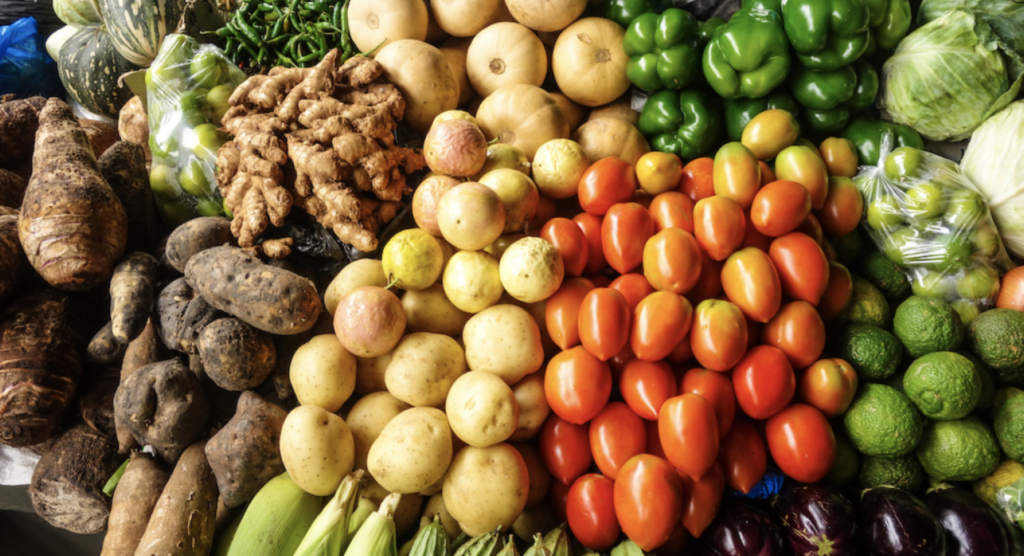
The AfCFTA Secretariat and AGRA have signed a MoU that targets non-tariff barriers, agro-processing and market integration to strengthen intra-African food trade and reduce food import costs.
AfCFTA and AGRA Formalize Partnership
The African Continental Free Trade Area (AfCFTA) Secretariat has signed a Memorandum of Understanding with the Alliance for a Green Revolution in Africa (AGRA) to improve agricultural trade across the continent.
The agreement was signed on the margins of the 39th African Union Summit. According to the AfCFTA Secretariat, the partnership is designed to accelerate intra-African agricultural trade and strengthen food systems.
AGRA is an African-led institution focused on scaling agricultural innovations to raise smallholder incomes, strengthen livelihoods, and improve food security. Since 2006, it has worked with governments, NGOs and private sector partners to deliver proven solutions to farmers and indigenous agricultural enterprises. AGRA supports inclusive agricultural transformation across 12 African countries.
Three-Year Agriculture Trade Action Plan
Speaking at the signing, Wamkele Mene, Secretary-General of the AfCFTA Secretariat, said the three-year “Agriculture Trade Action Plan” was created to ensure better distribution of food products and address food insecurity affecting “producers, processors and consumers across the continent.”
“The continent of Africa in the last few years has been undergoing a food crisis. Africa has the grains but we continue to be a net food importer,” Mene said.
He added that the Secretariat would leverage the “technical skills,” and “the expertise of AGRA combined with trade tools to enable movement of agric products across the African continent.”
“The main objective is to reduce the cost of food import bill in Africa,” he said.
Mene further noted that the Secretariat had spent the last three years working on the plan, which is expected to “reduce the cost of food and help to develop agro processing industries. Ministers of trade will adopt it and take it to heads of state for adoption,” he said.
Reducing Non-Tariff Barriers and Strengthening Value Chains
The organizations outlined that the partnership would support implementation of the AfCFTA Agri-Trade Action Plan, which proposes interventions including reducing non-tariff barriers, improving trade facilitation, promoting value addition and mobilizing investment in regional agricultural value chains.
“Trade will not transform Africa’s food systems unless farmers and agri-enterprises are able to produce competitively, meet international quality standards, and connect to reliable markets,” said Alice Ruhweza, President of AGRA. “This partnership is about making intra-African food trade work in practice—linking policy to delivery so that agriculture becomes a driver of inclusive growth, resilience and shared prosperity.”
The initiative is framed as part of efforts to translate the AfCFTA framework into practical outcomes for agricultural markets as implementation advances.
Water, Climate and Food Systems Integration
Ruhweza, President of AGRA, described the partnership as being about “virtual water.” “When we trade maize, citrus and processed dairy across borders, we’re also trading the water we use to produce them,” she said. “And by integrating our markets, water-abundant regions can nourish water-scarce regions.”
AGRA and the AfCFTA Secretariat said they would commit to protecting food systems from drought and floods by linking food corridors and food baskets into agro-processing zones that utilise sustainable water management.
“We will empower smallholder farmers to ensure the free trade prosperity reaches farmers and youth who farm our land and protect our streams,” they said, with the end goal being that “no child goes to bed hungry.”
“Let this partnership prove that when Africa trades with itself, it feeds itself,” Ruhweza said.
For more stories of trade from across Africa, visit our dedicated archives and follow us on LinkedIn.
1 Comment
Monetize your traffic instantly—enroll in our affiliate network!