

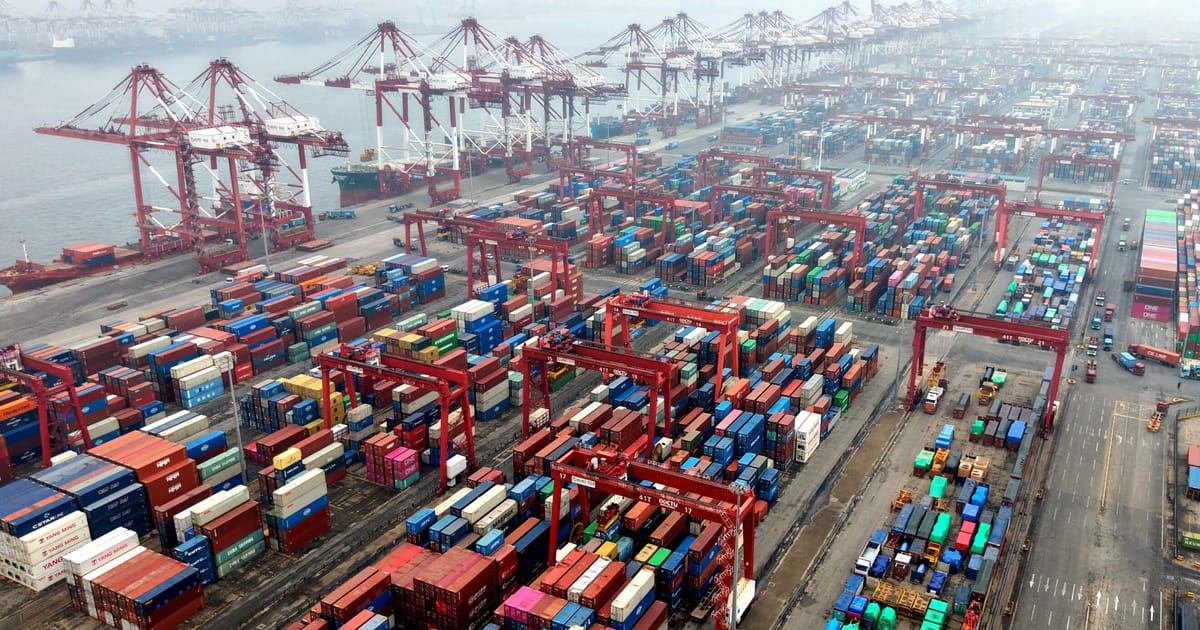
A new report warns that prolonged disruption to trade, energy and fertilizer flows due to the Middle East crisis could deepen pressure on African economies
Middle East Crisis Raises New Economic Risks for Africa
A new report by the African Union Commission, the African Development Bank Group (AfDB), the United Nations Economic Commission for Africa (ECA), and the United Nations Development Programme (UNDP) titled “Impacts of the Conflict in the Middle East on African Economies,” (PDF) warns that the crisis in the Middle East could reduce Africa’s economic growth by 0.2 percentage points in 2026 if the conflict lasts more than six months. Presented by Kevin Urama, Chief Economist and Vice President for Economic Governance and Knowledge Management at AfDB, at the UN Economic Commission meeting in Tangier, the report says the longer the disruption continues, the greater the risk of a broader slowdown across the continent.
“The report reminds us that the continent demonstrates remarkable resilience,” said Francisca Tatchouop Belobe, African Union Commissioner for Economic Affairs, Development, Trade, Tourism, Industry, and Mining.
Trade and Supply Pressures Come into Focus
The report points to disruption in shipping routes, energy flows and fertiliser supplies as key channels through which the crisis could affect African economies. It warns that higher fuel and food prices could quickly feed into a wider cost-of-living squeeze, while some countries may feel the effects of fertiliser shortages even more sharply than higher oil prices.
“Eighty percent of the oil imported into Africa comes from this region, as well as 50% of refined petroleum,” said Claver Gatete, Executive Secretary of the ECA. As a result of these conflicts, 31 African countries were already experiencing currency depreciation, Gatete said.
It also underlines the scale of Africa’s exposure to the region. According to the report, the Middle East accounts for 15.8% of Africa’s imports and 10.9% of its exports, leaving many economies vulnerable to prolonged instability.
Fertiliser Concerns Add to Vulnerability
One of the clearest warnings in the report concerns agriculture. It says disruptions to Gulf liquefied natural gas supply would affect ammonia and urea production, raising fertiliser costs and constraining supply during the crucial March-to-May planting season. That creates an additional layer of risk for economies already managing inflationary pressure and external shocks.
At the same time, the report suggests the effects will not be uniform. A few countries, including oil producer Nigeria and LNG exporter Mozambique, could benefit from higher prices, even as import-dependent economies face more strain.
Logistics Shifts Create Uneven Outcomes
The report also highlights how transport patterns are already being reshaped. Rerouted trade is increasing traffic through the Port of Maputo in Mozambique, Durban in South Africa, Walvis Bay in Namibia and Mauritius. In East Africa, Kenya is emerging as a logistics hub through Lamu Port and Nairobi, while Ethiopia is benefiting from its role as an emergency air bridge linking Asia, Africa and Europe through Ethiopian Airlines.
Policy Response Will Be Critical
With African growth still under pressure and debt levels already high, the report urges governments to strengthen domestic revenue collection, coordinate fuel procurement and establish emergency food corridors. It also recommends saving windfall oil revenues and deploying targeted social protection measures to limit the social and economic fallout.
Senior Vice President of AfDB, Marie-Laure Akin-Olugbagde, said, “there is a need for global coordination, as no country or institution can face these shocks alone. In addition, a rapid response is essential, as was the case during the COVID-19 pandemic and the war in Ukraine, and people must be placed at the center of interventions.”
“The shocks affect us deeply, and we have no choice but to be resilient—and African countries have the means to respond,” emphasized Ahunna Ezioknwa, Director of the UNDP Regional Bureau for Africa. “In Africa, we need to win the fight for energy independence… We must invest in domestic solutions and encourage young people to engage in innovation, digital technology, and artificial intelligence,” she added.
For more stories of trade and business from around Africa, visit our dedicated archives and follow us on LinkedIn.
7 Comments
https://shorturl.fm/JWWX3
https://shorturl.fm/RHCpP
https://shorturl.fm/5mu1i
https://shorturl.fm/Y5P7z
https://shorturl.fm/ek9VJ
I am really glad I clicked on this link, because the breakdown provided here is exactly what I needed to get a better grasp of the current situation and understand the context.
лавров хуйло
Oopbuy Spreadsheet is a free shopping-agent spreadsheet and product finder for cross-border shoppers. The oopbuy spreadsheet ? aggregates thousands of curated finds — with photos, prices and working agent links — so buyers can compare items ? across popular Chinese shopping agents
Oopbuy Spreadsheet