

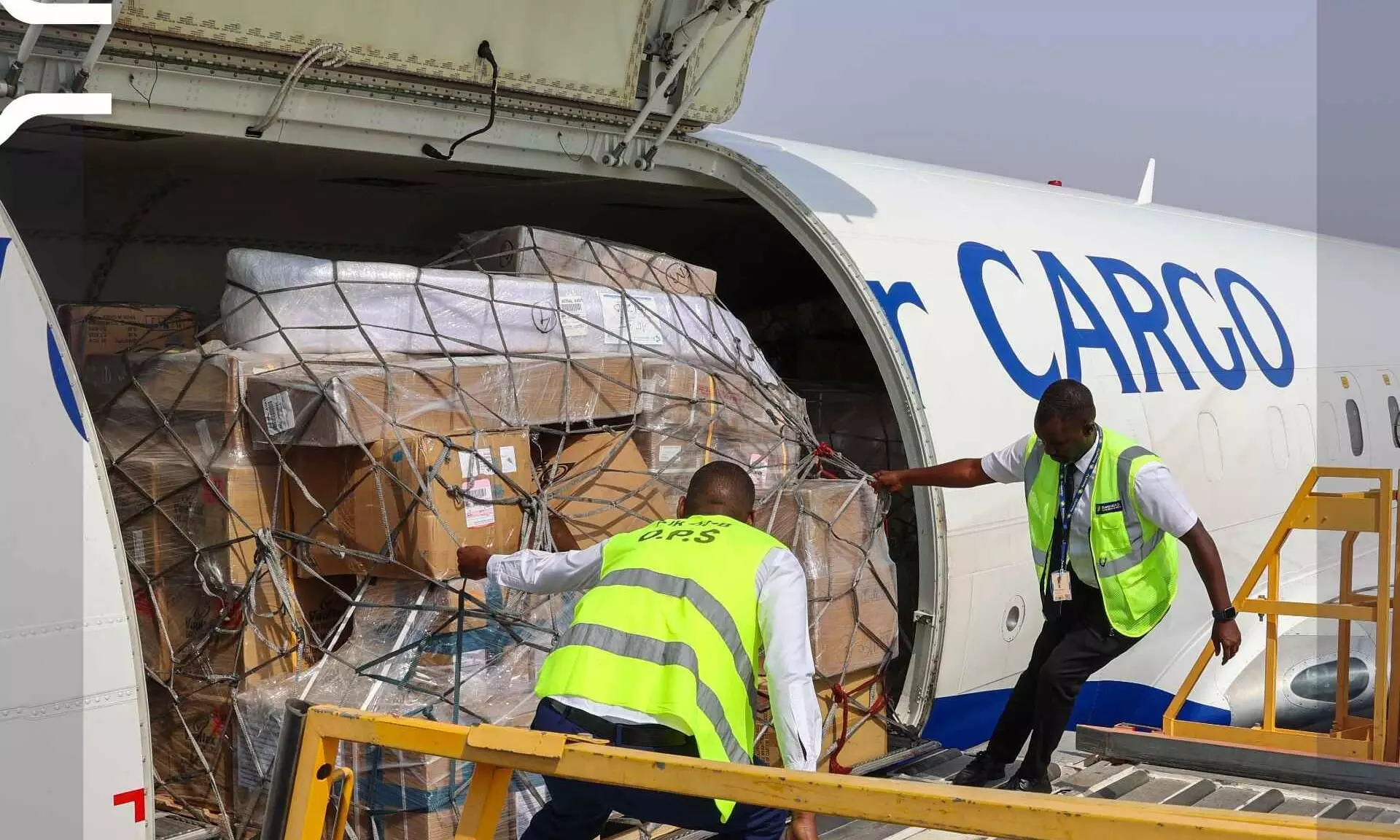
Stakeholders in the air cargo sector highlight perishables, e-commerce and evolving supply chains as key forces shaping Africa’s air cargo trajectory.
Africa’s Air Cargo Market Shows Strong Momentum
Air cargo demand in Africa is being fueled by perishables, a reduction in trade barriers and supply chain shifts, with the sector recording notable growth across 2025 and into early 2026. According to IATA data, African airlines saw a 6% year-on-year increase in demand in 2025, alongside a 7.8% rise in capacity.
The upward trajectory has continued into 2026, with demand rising by 18.2% in January and 21% in February, marking the strongest regional growth globally. Capacity also expanded during this period, reflecting efforts by airlines to scale networks and integrate more deeply into international supply chains.
Trade Lanes and Cargo Mix Drive Demand
Africa’s trade lanes are reinforcing this momentum. The Africa-Asia corridor, while accounting for a relatively small share of global volume, recorded 41.6% growth in January, marking its seventh consecutive month of expansion.
Cargo flows reflect a diversified mix. Imports into Africa from Asia include semiconductors, machinery parts and renewable energy components, while exports are dominated by perishables such as fruits, vegetables, flowers and seafood, alongside industrial raw materials and precious metals.
Despite this strong start, IATA forecasts more moderate growth of 2% for the region in 2026, broadly aligned with global expectations of 2.6% demand growth.
Industry Stakeholders Point to Key Growth Verticals
Operators across the value chain remain optimistic. Sanjeev Gadhia, chief executive of Astral Aviation, notes: “We expect stable to moderately positive growth in 2026, despite ongoing geopolitical and economic uncertainties.”
He adds: “E-commerce, pharmaceuticals, perishables, and energy-related cargo are expected to perform strongly, while some general cargo segments may remain under pressure.”
Gadhia also highlights the structural role of airfreight, stating: “Airfreight remains essential for time-sensitive supply chains.”
Looking ahead, he emphasizes intra-African trade potential: “Africa is one of the most promising air cargo growth regions globally. With AfCFTA gaining traction, we anticipate stronger intra-African trade, increased regional connectivity, and growth in perishables, pharma, and e-commerce flows.”
Ground Handling and Infrastructure Expansion
Ground handlers are also seeing increased activity. Dirk Goovaerts, chief executive for Continental Europe, Middle East, Africa, India and global cargo chair at Swissport, says the company handled approximately 400,000 tons of cargo across Africa in 2025.
“This reflects the growing importance of the African market within Swissport’s global cargo network,” he explains.
Goovaerts identifies three core drivers: “First, perishables exports remain a key driver in many African markets, particularly in horticulture and fresh produce.
“Second, e-commerce continues to reshape air cargo flows, requiring faster processing, dedicated facilities and greater operational flexibility.
“Third, the pharmaceutical and healthcare logistics segment is expanding, with increased demand for temperature-controlled supply chains and certified handling processes.”
He adds: “The expectation for Africa’s air cargo market is a steady growth.”
Supply Chain Shifts Create New Opportunities
Shifting global supply chains are also opening new avenues. Gadhia observes: “Supply chains are becoming more diversified, and Africa has an opportunity to position itself as a strategic logistics hub linking global markets.”
Goovaerts echoes this view: “Global supply chains continue to evolve due to geopolitical developments, tariff policies, and the ongoing diversification of sourcing and manufacturing locations.”
He adds: “We’re seeing diversification across multiple trade lanes – not just traditional European routes but growing volumes to the Middle East, Asia, and intra-African corridors. This diversification actually strengthens resilience and creates new opportunities.”
Fleet Expansion and Network Development
Kenya Airways is refining its cargo fleet to support both network growth and specialised freight demand. Its current fleet includes two Boeing 737-300P2Fs, two 737-800P2Fs and a recently added Boeing 747F, which is strengthening capacity on routes into the Middle East and Asia.
Looking ahead, the airline plans to introduce Boeing 777 freighters, with two Boeing 767Fs serving as an interim solution due to cost and availability constraints. As cargo director Fitsum Abadi Gebrehawaria notes: “We may transition with 767-300Fs but with our strategy between now and 2030, we are planning to have three 777Fs.”
The network strategy reflects cargo flows. Perishables dominate outbound routes to Europe and North America, while inbound e-commerce from China is also carried. Narrowbody freighters serve regional routes across Africa, the Middle East and India, transporting perishables exports alongside inbound general cargo and express shipments.
Persistent Challenges Remain
Despite growth, structural constraints continue to weigh on the sector. These include high operating costs, infrastructure gaps, regulatory fragmentation and blocked airline funds. IATA reported that $1.2bn in airline funds remained unrepatriated as of October 2025, with 93% located in Africa and the Middle East.
Gadhia notes: “Geopolitical risks, infrastructure gaps, fragmented regulations, high taxes and charges, and slow implementation of liberalisation frameworks such as the Single African Air Transport Market (SAATM) remain key hurdles… These factors increase costs and limit connectivity.”
At the same time, progress is underway. Industry stakeholders are engaging governments to improve regulatory alignment and customs efficiency, while the continued rollout of AfCFTA is supporting trade flows and reducing lead times.
For more stories of logistics, visit our dedicated archives.
11 Comments
sfyjfs
https://shorturl.fm/sT2hd
https://shorturl.fm/qXeMQ
https://shorturl.fm/PkVC0
https://shorturl.fm/efXIl
https://shorturl.fm/lvF6b
https://shorturl.fm/5VEr9
https://shorturl.fm/n3xqJ
https://shorturl.fm/9Bs4A
https://shorturl.fm/oHaiI
https://shorturl.fm/jpq4B