

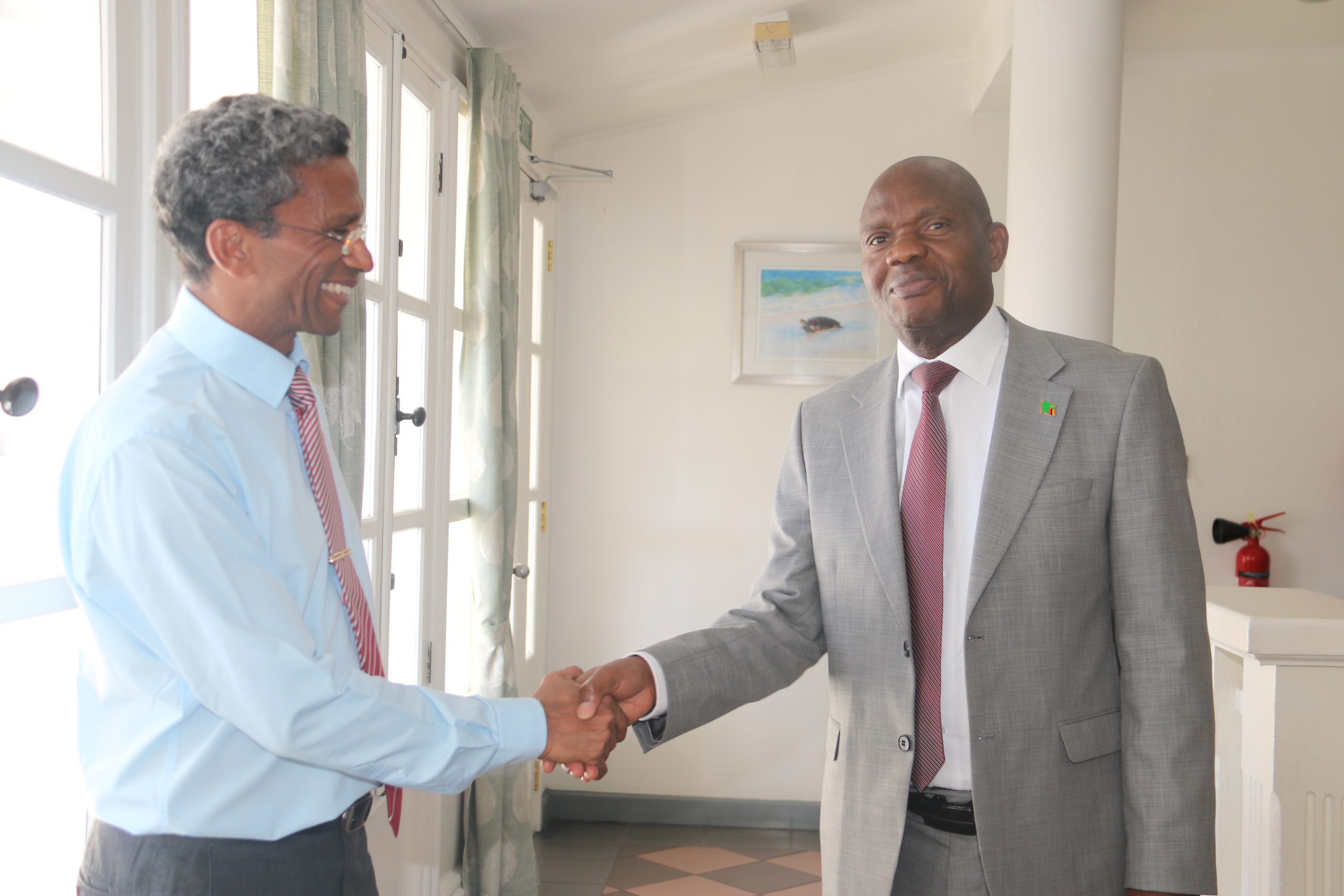
Seychelles and Zambia are moving to broaden bilateral cooperation across agriculture, trade, education and tourism, with food security emerging as a central priority for the island nation.
The discussions come as Seychelles looks to make greater use of Zambia’s agricultural capacity, while both countries review existing areas of cooperation and explore sectors where stronger engagement could create practical economic benefits.
Agriculture at the Centre
Agriculture is the clearest area of opportunity. Seychelles has limited arable land, making food security a persistent strategic concern. Zambia, by contrast, was identified in the discussions for its vast and fertile agricultural lands, as well as its bovine industry, which produces quality meat.
President Patrick Herminie explored opportunities for collaboration with Zambia, including the possibility of leasing agricultural land, as part of efforts to strengthen national food security. The President noted that such cooperation could support food security while creating new opportunities for trade, investment and partnership.
Trade and Food Security
Seychelles’ Minister for Foreign Affairs and the Diaspora, Barry Faure, highlighted the potential for cooperation in agriculture and trade during a meeting with Zambia’s High Commissioner-designate, Alfred Musemuna.
The discussion focused on how Seychelles could benefit from Zambia’s agricultural resources, particularly in relation to meat production and wider food security needs. For business and policy audiences, the talks point to a practical model of intra-African cooperation, where one country’s resource base can help address another’s structural constraints.
Education Links Remain Important
Education was another established pillar of the relationship. Faure thanked the Zambian government for its ongoing cooperation in the sector, where Zambian teachers are currently contributing to Seychelles’ public school system.
He also expressed Seychelles’ interest in expanding cooperation in education. The continued presence of Zambian teachers in Seychelles shows that the relationship already extends beyond diplomacy and trade, with people-to-people cooperation forming part of the broader bilateral framework.
Tourism Agreements Under Review
The two sides also reviewed several existing Memoranda of Understanding that are currently inactive, including an agreement in tourism.
Faure expressed interest in revitalizing cooperation in this area to encourage exchanges and promote the sharing of ideas, expertise and best practices. Musemuna welcomed the proposal, noting that joint marketing initiatives and improved air connectivity would bring significant benefits to both countries.
Climate and Regional Cooperation
Environmental issues and climate change were also discussed, including both countries’ efforts to move towards more sustainable energy sources and away from fossil fuels.
Faure also appealed for Zambia’s support in advocating for the Multidimensional Vulnerability Index, noting Seychelles’ exposure to external economic shocks despite its high GDP per capita, while also recognizing Zambia’s own vulnerabilities as a landlocked country.
The meeting further covered both countries’ participation in regional organizations, including SADC, COMESA and the African Union, as well as consular and diaspora engagement.
For more stories of trade, visit our dedicated archives and follow us on LinkedIn.
Seychelles and Zambia are exploring deeper cooperation across agriculture, trade, education and tourism, with food security at the centre of the discussions. The talks highlight how intra-African partnerships can connect complementary strengths, from Zambia’s agricultural capacity to Seychelles’ strategic need for resilient supply chains. For policymakers and investors, the relationship points to practical opportunities in food systems, tourism, education and regional cooperation.