

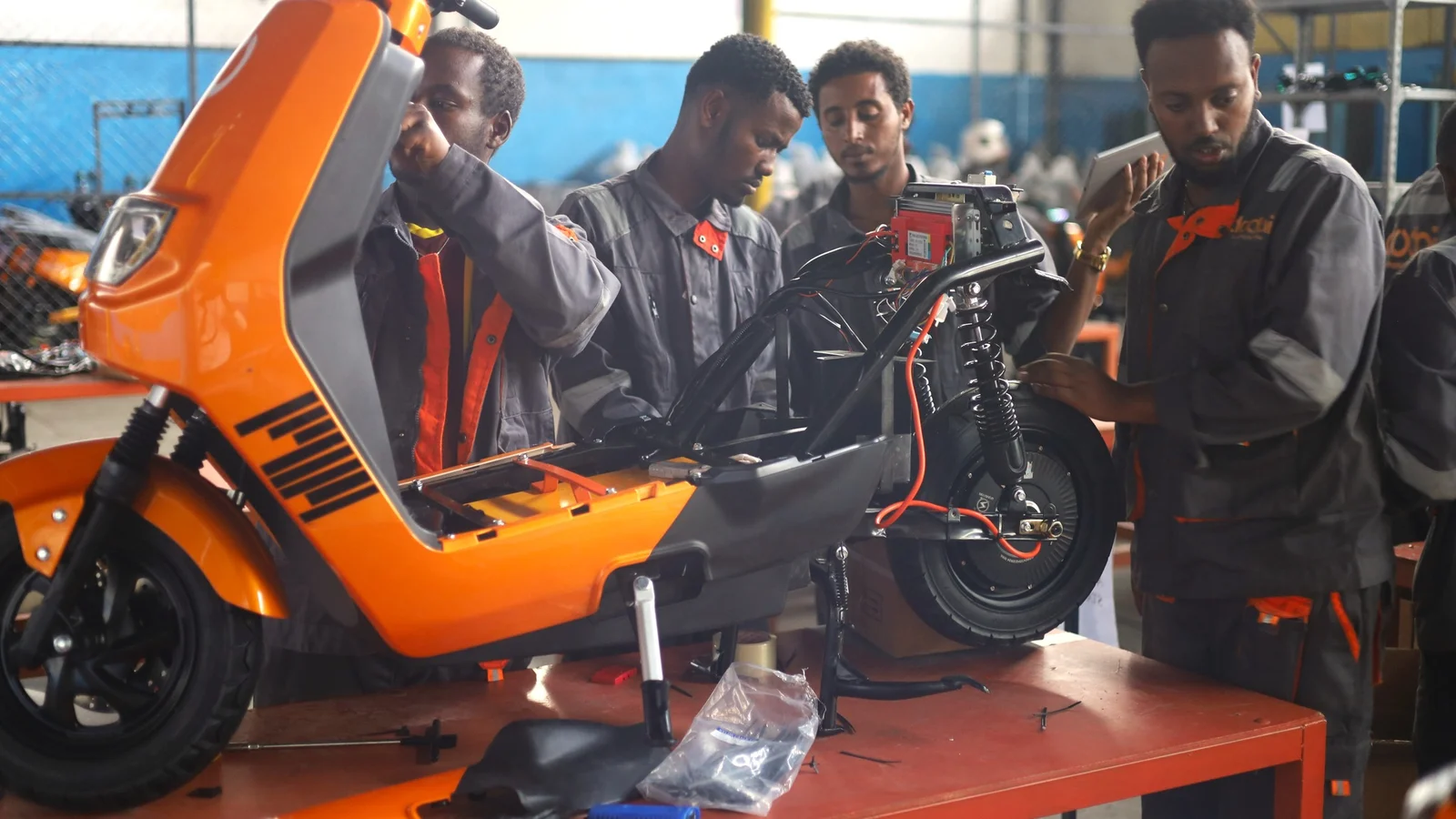
Ethiopian startup Dodai is scaling electric two- and three-wheelers through a battery-swapping network designed for affordability and reliability.
An Infrastructure-Led Approach
E-mobility startup Dodai is building and operating the infrastructure required to make electric vehicles (EVs) practical, affordable, and scalable in Ethiopia. Founded in 2023, the company focuses on electric two- and three-wheelers and supports their use through a battery-swapping network that allows drivers to replace depleted batteries in minutes rather than waiting for long charging times.
Dodai’s electric motorcycles are priced between $1,200 and $2,000, depending on battery capacity and range. They have gained traction among delivery-focused businesses, with a single charge capable of covering up to 150 kilometres (93 miles). The company differentiates itself through the use of lithium-ion batteries, while many competitors continue to rely on lead-acid alternatives.
All Dodai motorcycles are assembled in Ethiopia using imported components, and the company has sold approximately 1,500 units over the past 18 months.
By offering vehicles, batteries, and energy infrastructure as part of an integrated system, Dodai aims to remove cost, reliability, and accessibility barriers that have historically limited EV adoption in emerging markets.
Addressing the Gap Between Policy and Reality
According to founder and CEO Yuma Sasaki, Dodai was created in response to a clear mismatch between ambition and implementation. “Dodai identified a significant gap between strong policy ambition around electric mobility and the practical realities faced by everyday users. While Ethiopia has abundant renewable power and supportive regulation, charging infrastructure remains limited, electricity access is uneven, and consumers are under significant economic pressure,” he said.
Sasaki added that imported solutions have often failed to account for local conditions. “Many e-mobility solutions imported from developed markets are poorly suited to these conditions, and remain unaffordable or impractical for most users.”
Battery Swapping as a Competitive Differentiator
Dodai’s battery-swapping model is designed to directly address affordability, speed, and reliability. Sasaki said the company competes primarily with petrol-powered motorcycles, noting that there are currently no other companies building integrated battery-swapping networks at scale in the Ethiopian market.
He also pointed to Ethiopia’s broader market fundamentals as a key reason for launching locally. “Indeed, one of the reasons we dedicated to start in Ethiopia is because the country has strong fundamentals – Africa’s second largest population, strong growth prospects, and a liberalizing economic agenda – but still remains a ‘blue ocean’ with limited competition,” Sasaki said.
Commercial Users Drive Adoption
Uptake has been driven largely by economic necessity rather than lifestyle choice. “In Ethiopia, as in much of Africa, transport is not a lifestyle choice but a means of earning a living,” Sasaki said. “Users adopt electric mobility when it is clearly cheaper and more reliable than the alternatives.”
Dodai’s strongest adoption has come from commercial users operating in Addis Ababa, where the company assembles electric motorcycles locally and supports them with a growing battery-swapping network. Sasaki said drivers switching from fuel-powered motorcycles to Dodai e-bikes have reported reducing fuel and maintenance costs by between 80–90 per cent in some cases. These savings, he noted, translate into higher take-home earnings, reduced financial stress, and more predictable working hours.
Expansion Plans and Funding
Dodai is currently focused on expanding its battery-swapping network within Addis Ababa, with plans to move into other major Ethiopian cities and eventually neighboring African countries with similar market dynamics. The company secured a US$7 million funding round in 2024, which enabled it to accelerate infrastructure deployment and expand its team.
“A major milestone has been operating in a market that became the first in the world to ban the import of internal combustion engine vehicles in January 2023, which significantly accelerated interest in electric alternatives, like those provided by Dodai,” Sasaki said.
Business Model and Operational Challenges
Dodai generates revenue through the sale of its electric bikes and battery-swapping fees. As an infrastructure-led company, it is prioritizing network expansion over short-term profitability. “Revenues have grown steadily alongside deployment, and unit economics at the battery and fleet level are improving as scale increases,” Sasaki said.
The company has faced challenges typical of infrastructure-heavy ventures in emerging markets, including uneven electricity access, upfront capital requirements, and supply-chain constraints for batteries and components. However, Sasaki noted that Ethiopia’s expanding renewable energy capacity and policy support have strengthened the company’s long-term outlook.
For more stories of infrastructure from across Africa, visit our dedicated archives and follow us on LinkedIn.
1 Comment
bz6qeu