

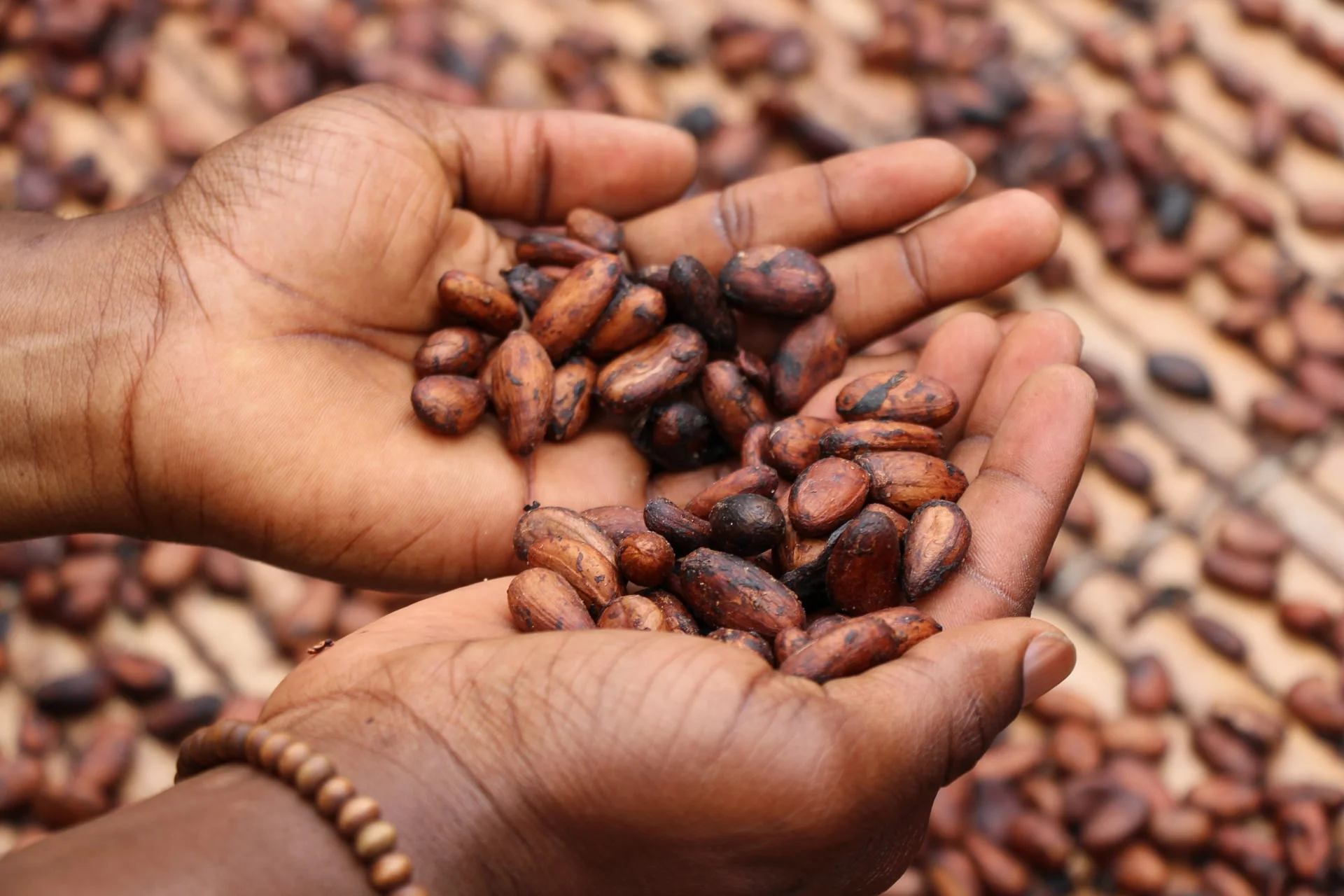
Government and agricultural leaders outline policy and investment actions to restore Nigeria’s competitiveness in global cocoa production.
Nigeria has unveiled a coordinated push to revive its cocoa industry, with government officials emphasising trade facilitation, climate-oriented investment and policy support to boost production and competitiveness.
Trade Expansion, Climate Compliance and Value Chain Development
Nigeria’s Minister of Agriculture and Food Security, Abubakar Kyari, disclosed the new approach in London at the International Cocoa and Chocolate Forum (ICCF 2026), where he outlined a strategy focused on trade expansion, climate compliance, and value chain development.
In a statement released by Ezeaja Ikemefuna, Head of Information Department at the Federal Ministry of Agriculture and Food Security, Kyari said that Nigeria has gazetted its Provisional Schedule of Tariff Concessions and is advancing AfCFTA implementation, which is projected to boost intra-African trade by 53.3 per cent by 2026.
In the statement, Kyari said Nigeria is actively engaging with global trade partners, including the European Union and the Comprehensive and Progressive Agreement for Trans-Pacific Partnership (CPTPP), to safeguard trade sovereignty and expand cocoa export opportunities.
Kyari identified sustainability compliance as a central pillar of Nigeria’s cocoa strategy, with particular emphasis on the European Union Deforestation Regulation (EUDR), which has emerged as a critical market requirement for cocoa exporters. He said Nigeria has already enacted the Climate Change Act, established a National Task Force on EUDR Compliance, and developed a National Cocoa Development Plan aimed at modernizing production and strengthening the cocoa value chain.
According to Kyari, the government intends to transform EUDR compliance into a competitive advantage through public-private partnerships, geospatial mapping, and innovative financing mechanisms. He said these measures are designed to improve traceability, support carbon-smart cocoa production, and attract responsible foreign investment.
Sustainability and the Environment
“Nigeria is committed to reclaiming its rightful position among the world’s top cocoa-producing countries through sustainable practices, value chain development, and expanded trade,” Kyari said. “Our focus is on responsible investment, increased productivity, and deeper economic activity that creates jobs and strengthens food security.”
He added that adherence to global climate and deforestation standards would be leveraged strategically. “By complying with global climate and deforestation standards, we intend to turn sustainability into a competitive advantage for Nigerian cocoa,” Kyari said.
The minister also underscored the importance of youth inclusion and climate resilience within the broader strategy, noting that Nigeria is implementing climate-smart agriculture initiatives, improving access to finance, and strengthening market linkages to enhance farmers’ livelihoods.
International Dialogue is Vital
Kyari further described ICCF 2026 as a critical platform for dialogue and partnership, commending its conveners for promoting cultural exchange and economic collaboration across Africa. “Platforms like this forum are essential for building partnerships that can drive inclusive growth and economic transformation across Africa,” he said.
For more stories of trade and agriculture from across Africa, visit our dedicated archives.