

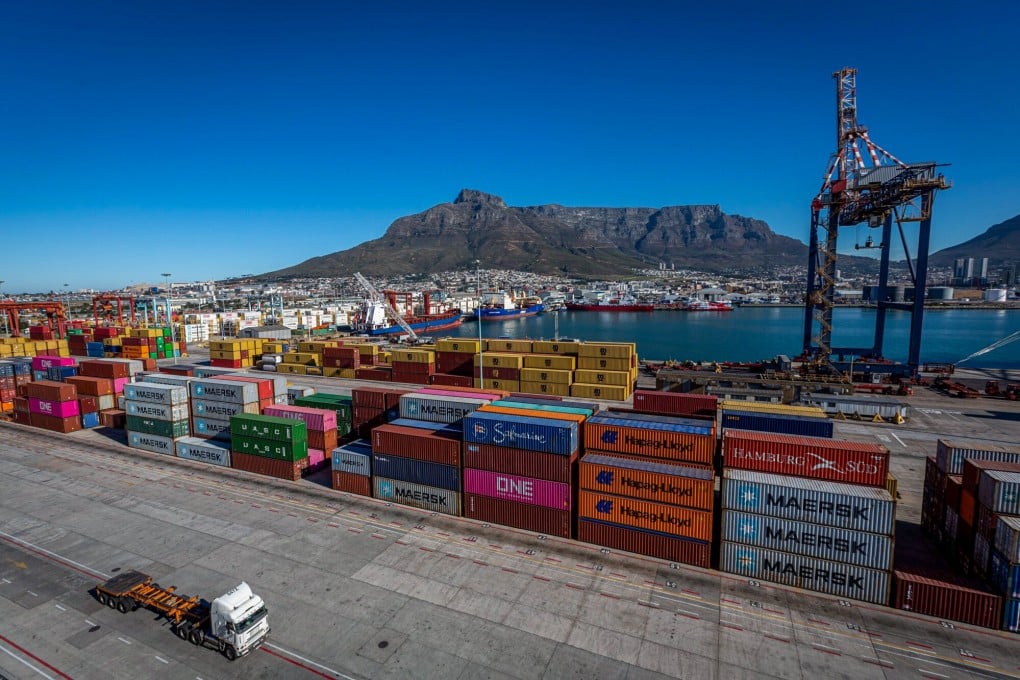
Strong output in corn, citrus, table grapes and wine helped offset weaker US demand, while Africa remained the largest regional destination for South African agricultural exports. The country’s agricultural exports reached a new annual peak in 2025, rising to $15.1 billion even as shipments to the United States weakened sharply in the second half of the year.
Record Exports Despite Mounting Trade Pressures
The export total of $15.1 billion represented a 10% year-on-year increase and marked the seventh consecutive annual rise in agricultural exports. The Agricultural Business Chamber of South Africa attributed the increase to higher volumes and prices.
US Shipments Slump as Tariffs Bite
While overall exports climbed, exports to the US declined in the latter part of 2025. Exports to the US fell by 11% in the third quarter of 2025 and by 39% in the final quarter, according to Wandile Sihlobo, chief economist at the Agricultural Business Chamber of South Africa. “The tariffs imposed on some products weighed heavily on shipments to the US in the latter part of the year,” Sihlobo said.
US duties of as much as 30% on some agricultural goods affected South Africa’s fruit and wine producers, although some items, including oranges and macadamia nuts, were later exempted.
Output Gains Underpin Performance
Higher corn, citrus, table grape and wine output supported exports. Sihlobo also pointed to continued assessment of tariff impacts: “We believe that in 2026, we will be able to get a clearer picture of the impact of all these tariffs,” he said in a separate note.
Africa Leads, with Asia–Middle East Significant
With the US share shrinking, South Africa’s trade mix leaned more heavily toward regional and emerging markets. In terms of overall trade, the rest of Africa accounted for 53% of shipments in the fourth quarter, with Asia and the Middle East at a combined 17%, the European Union at 16%, and the Americas (including the US) at 4%.
Overall, South Africa exported $504 million of agricultural produce to the US in 2025, down 3% from 2024, while importing $7.8 billion of agricultural goods in 2025, mainly rice, palm oil, poultry and wheat.
Ultimately, South Africa’s record performance underscores a deeper structural shift: the country’s agricultural resilience is increasingly anchored in the continent itself. With 53% of fourth-quarter shipments destined for the rest of Africa, intra-African trade has moved from complementary to central.
As US demand faltered under tariff pressure, regional markets absorbed greater volumes of corn, citrus, table grapes and wine, reinforcing supply chains, market integration and price stability across borders. This growing continental orientation not only cushions external shocks but also strengthens the case for deeper trade facilitation under AfCFTA, positioning South Africa as both a beneficiary and a driver of more self-sustaining African agricultural commerce.
For more stories of African trade, visit our dedicated archives.