

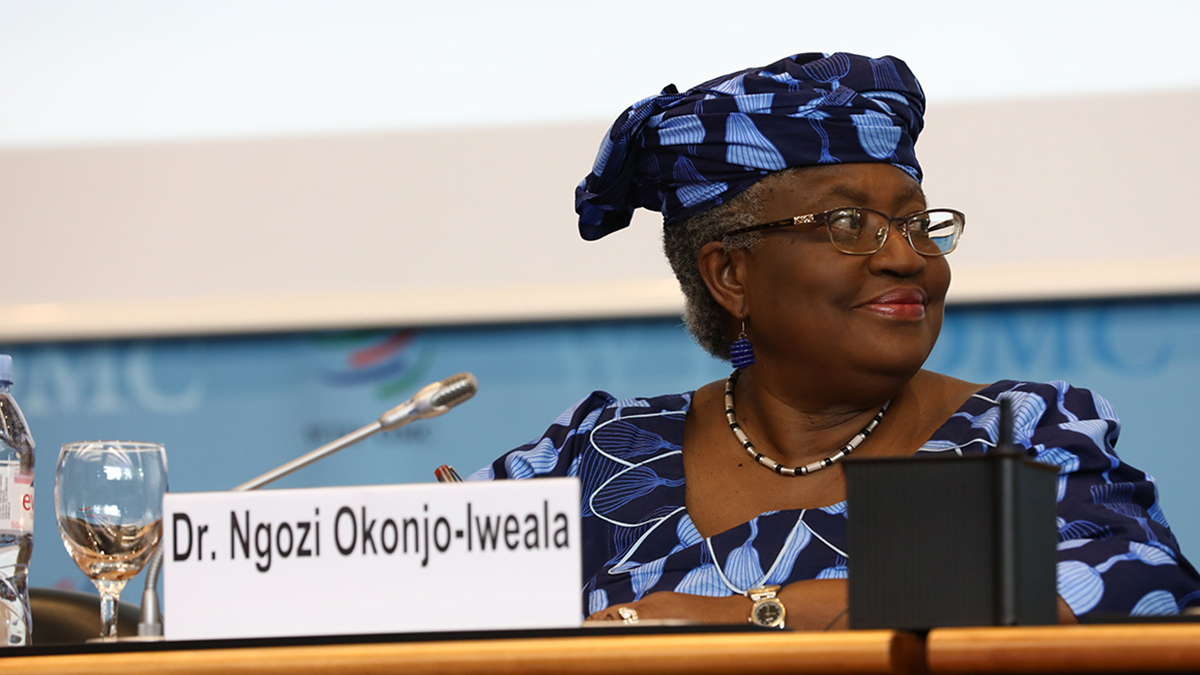
At Davos, Ngozi Okonjo-Iweala, the WTO chief pointed to value addition, supply-chain diversification, and scale-up opportunities in textiles, digital trade, and services.
In Davos, World Trade Organization (WTO) Director-General Ngozi Okonjo-Iweala urged African economies to focus on value addition as a practical route to strengthening intra-continental commerce and competitiveness beyond the continent.
Value Addition as a Trade Strategy
Okonjo-Iweala argued that Africa’s trade profile remains heavily weighted toward unprocessed commodities, calling for faster movement into higher-value products. She said, “We need to add value to our products, even for the intra-Africa market, because we are trading even with each other. We have mostly commodities and raw materials that we’re trading. And 60 percent of our exports elsewhere are still raw commodities. And I know it’s changing and African leaders are recognizing now that they have to change. So they’re making moves. But we need to accelerate that, add value. That way we can trade different products to each other.”
The Intra-African Trade Gap
Linking value addition to regional market depth, Okonjo-Iweala pointed to the current level of intra-African trade, saying it “currently accounts for only 15 to 20 percent of total trade on the continent.” Her message framed processing and product diversification not as an industrial ideal, but as a necessary lever for increasing the volume and variety of goods traded across African borders.
Nigeria’s Textile and Apparel Opportunity
Okonjo-Iweala highlighted textiles and apparel as a potential growth area where Nigeria could “capture the African market,” citing local strengths in fashion and the need to scale. She stated, “I’m very excited that Nigeria might be able to take over the African market in textiles and apparel, because we have powerful people in fashion. And if we can scale it and the Honourable Minister of Industry, Trade and Investment says we’re already working on trying to scale up some of this. We need to scale it so we can capture the African market because we have a strong advantage in that particular area.”
Supply Chains, Diversification, and “WTO Terms”
On the global environment, Okonjo-Iweala pushed back on the idea that trade rules have collapsed, stating, “Almost three quarters of world trade is still going on on WTO terms.” She linked current disruptions to a wider shift toward diversification by firms and countries seeking to reduce “over-dependence,” and argued Nigeria could attract supply chains seeking alternative bases. “This is our time,” she said, “but it will not fall on our laps. We have to work for it.”
Digital Trade and Youth-Led Growth
Okonjo-Iweala also pointed to growth potential in digital trade and digitally delivered services, adding, “If we can capitalize on that, we can capture a big slice of the African market.”
For more stories of business and trade, visit our dedicated archives and follow us on LinkedIn.