

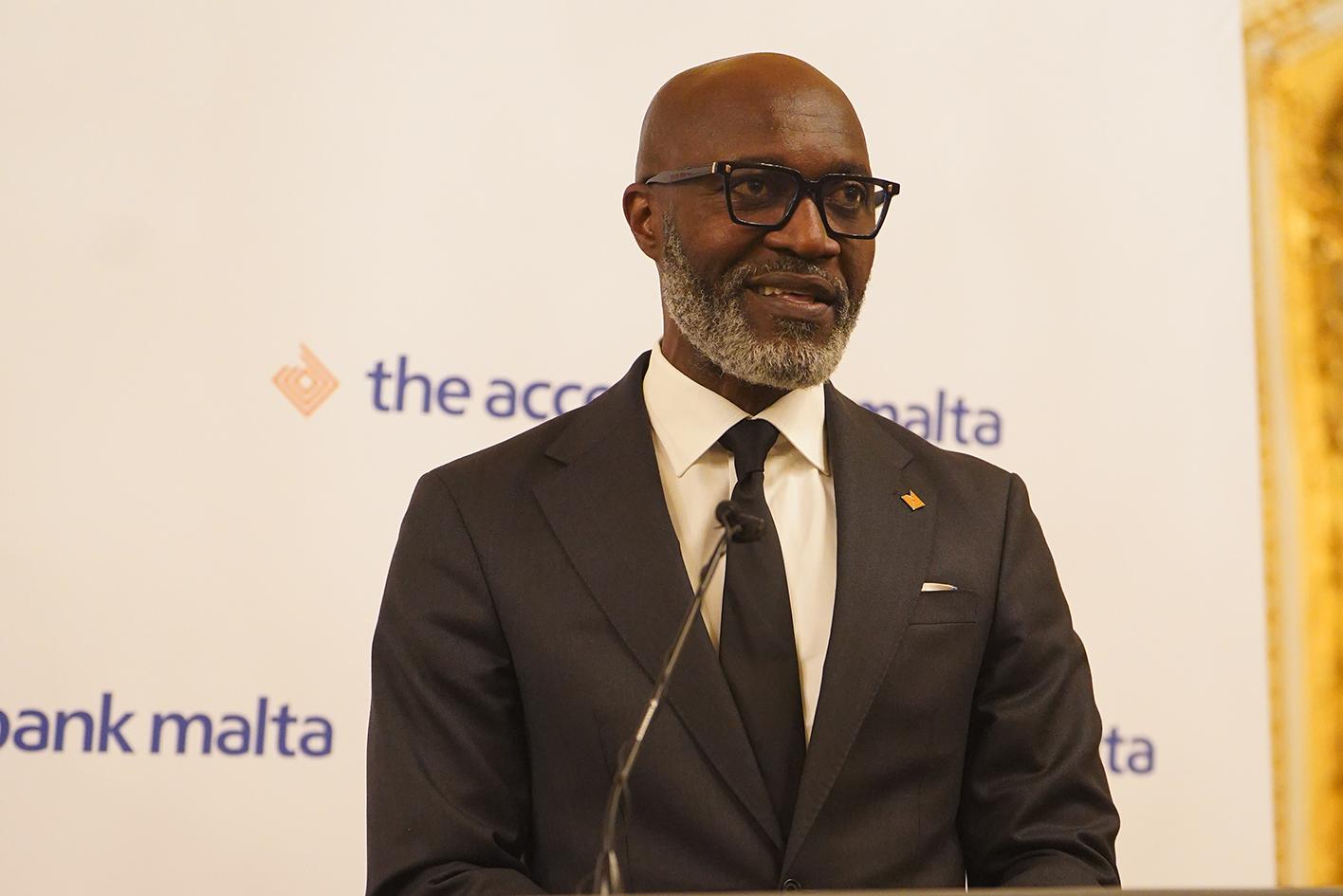
Access Bank Group Managing Director and Chief Executive Officer Roosevelt Ogbonna says Africa must move from fragmented corridors to practical trade integration, with finance, infrastructure and payments reform in focus.
Access Bank Calls for Deeper Intra-African Trade at ATC 2026
Access Bank Plc used the Africa Trade Conference 2026 in Cape Town, South Africa, to press for stronger collaboration among policymakers, financiers and businesses to accelerate trade across the continent. Roosevelt Ogbonna, Group Managing Director and Chief Executive Officer of Access Bank Plc, said Africa must dismantle the structural barriers that continue to hold back commerce despite the scale of its market potential.
Moving Beyond Trade Potential
Ogbonna said Africa still accounts for only a small share of global trade, even as many businesses across the continent are eager to expand beyond their home markets. He argued that many trade corridors remain “fragmented and more aspirational than functional,” limiting the ability of smaller businesses to participate fully in cross-border commerce.
In his words: “Last year we asked ourselves a simple question, how can Africa trade with itself and with the rest of the world in a way that creates shared prosperity beyond just numbers. The facts were sobering. Africa still controls a small share of global trade and many small businesses that aspire to trade across borders remain constrained.”
From Discussion to Execution
The conference, themed “Turning Vision into Velocity: Building Africa’s Trade Ecosystem for Real-World Impact”, was positioned as a follow-up to the inaugural 2025 gathering. Ogbonna said the 2026 edition was designed not as a fresh start, but as a continuation of earlier discussions with a stronger focus on practical implementation and concrete action.
He also pointed to signs of progress. According to Ogbonna, value chains are emerging across agriculture, manufacturing and services, while digital platforms are helping to reduce friction in payments, logistics and market access across borders. But he stressed that these improvements remain uneven across the continent.
Persistent Barriers to Seamless Trade
Ogbonna identified several constraints still affecting businesses seeking to operate across African borders. These include the high cost of finance, fragmented payment systems, infrastructure gaps and limited trade information. He warned that gains concentrated in only a few markets and corridors would not be enough to unlock Africa’s wider trade potential.
He said: “Many of these improvements are concentrated in specific markets and corridors, and that is not good enough if we are to truly unlock the potential of Africa’s trade.”
Infrastructure and private capital in focus
Also speaking at the conference, Kennedy Mbekeani, Director-General for Southern Africa at the African Development Bank, underscored the importance of infrastructure to Africa’s economic ambitions. He called for greater mobilisation of private capital, noting that many governments face limited fiscal space and overstretched balance sheets.
Mbekeani said: “The mobilisation of private capital remains crucial as many African governments are constrained by limited fiscal space and overstretched balance sheets.” He added that regulatory harmony must be matched by physical and digital connectivity if regional integration is to deliver benefits across member countries.
Taken together, the discussions underscored a central message: Africa’s trade ambitions will depend less on new declarations and more on practical coordination across finance, infrastructure, payments and policy. By bringing together governments, development institutions and private-sector actors, the forum highlighted the growing recognition that deeper intra-African trade will require systems that work seamlessly across borders. For Access Bank and its partners, the task ahead is clear—turn Africa’s vast market potential into a functioning ecosystem that enables businesses across the continent to trade more easily with one another.
For more stories of trade from across Africa, visit our dedicated archives and follow us on LinkedIn.
16 Comments
Pingback: hello world
Promote our brand and get paid—enroll in our affiliate program!
https://shorturl.fm/Nlm7z
https://shorturl.fm/efmHL
Pingback: voriconazole tablet crush
Pingback: tadalafil joint pain
Pingback: saxenda cheaper
Pingback: ivermectin demodex topical therapy
Pingback: minoxidil men’s coverage improvement
Pingback: vardenafil 5 mg profile
Pingback: vardenafil food considerations
Pingback: vardenafil warning details
Pingback: orlistat food‑dependent action
Pingback: insurance requirements
Pingback: augmentin drug summary
Best experience so far! The bonuses are actually fair and the payout process is way faster than other sites I’ve tried. Cheers to phjlpgcasino!