

Rail reforms and billions of dollars in corridor investment are opening African freight networks to private capital as demand for critical minerals grows.
South African rail services provider Traxtion is expanding its rolling stock as rail reforms and critical-mineral investment reshape freight routes across Southern and Central Africa.
The company is investing R3.4 billion ($210 million) in 46 locomotives and 920 wagons as governments open state rail networks to private operators. According to reports, the move comes as South Africa, Angola, the Democratic Republic of Congo (DRC), Zambia, Mozambique and Zimbabwe pursue concessions and open-access models intended to increase freight capacity and commodity exports.
Private Capital Follows Rail Reform
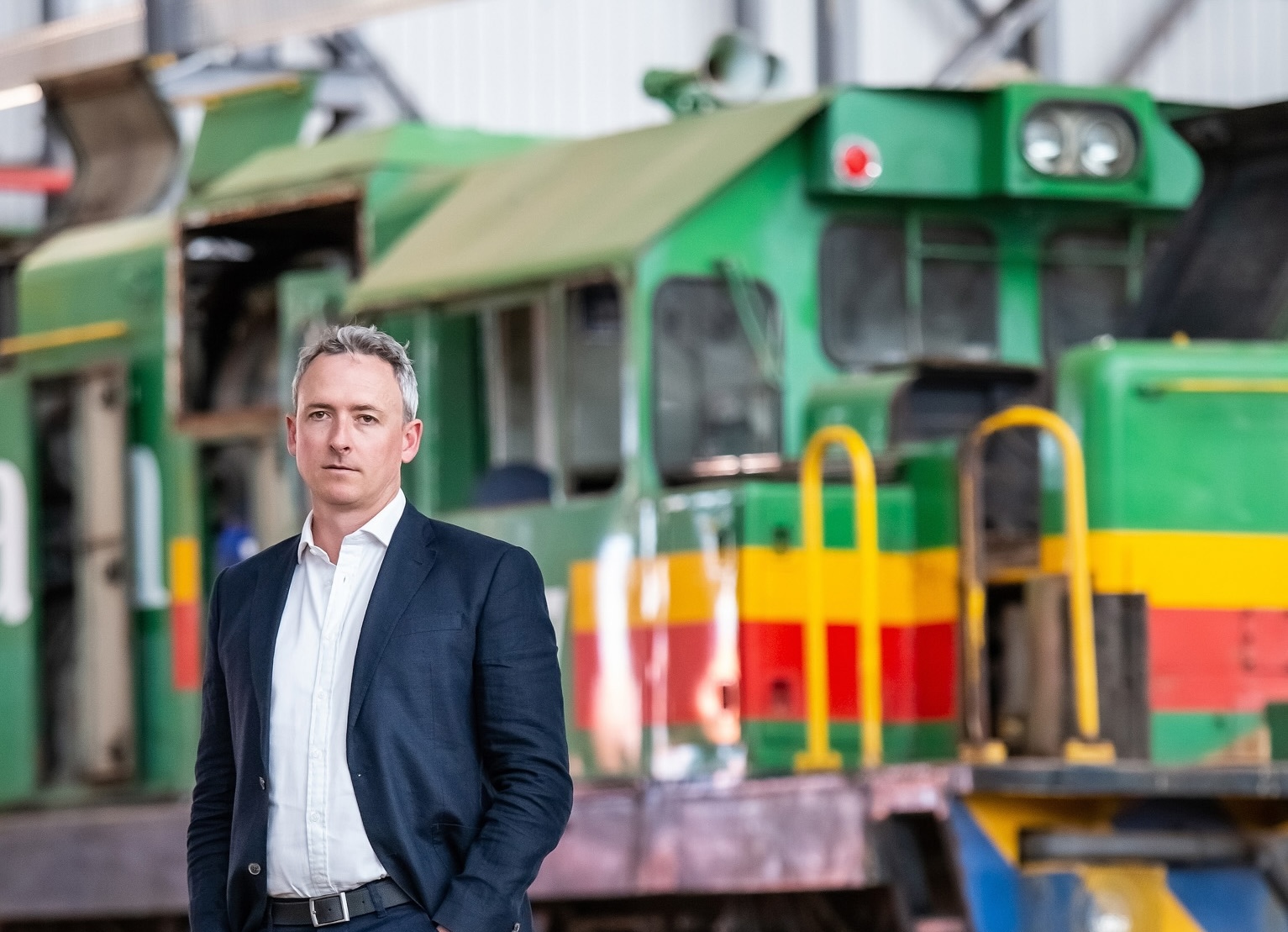
Traxtion CEO James Holley said the program reflects growing confidence in regional rail policy.
“The fact that we have announced this investment says everything about our confidence in the direction of travel,” said Holley.
South Africa is introducing an open-access model allowing private operators to run trains on state-owned infrastructure. Traxtion has also linked its program to local manufacturing and skills transfer, targeting at least 60% local content.
“Every additional locomotive we put to work lowers logistics costs, protects the road network, improves our environmental footprint,” Holley said in a Traxtion company announcement.
Mineral Corridors Draw Investment
The shift extends beyond South Africa. Angola has granted a 30-year concession for the Lobito Corridor railway to a Trafigura-led consortium, while the DRC has awarded Mota-Engil a concession to upgrade infrastructure connecting mining regions with the Atlantic route.
Zimbabwe is pursuing a $533 million rail modernization program with China Railway International Group, while Zambia and Tanzania are advancing the $1.4 billion revitalisation of TAZARA, according to Reuters.
Lobito Expands Atlantic Route
The Lobito Atlantic Railway is becoming a major mineral-export corridor linking Angola with the DRC and, eventually, Zambia.
Financing backed by the US International Development Finance Corporation and Development Bank of Southern Africa is expected to increase transport capacity to 4.6 million tons and cut critical-mineral transport costs by up to 30%, according to the US International Development Finance Corporation.
Angola’s Transport Minister Ricardo D’Abreu called the financing a “historic milestone for Angola”, saying the railway plays “a vital role in connecting regions and facilitating trade.”
“This investment builds on the impactful work DFC is already leading along the corridor, reinforcing its mission to drive sustainable economic growth and strengthen strategic infrastructure,” said Ben Black, DFC CEO.
TAZARA Targets Lower Trade Costs
The 1,860-kilometre TAZARA railway connecting Zambia with Tanzania’s port of Dar es Salaam is undergoing its own overhaul.
A 31-year concession with China Civil Engineering Construction Corporation includes track rehabilitation, new signaling, 34 locomotives and 760 wagons. Freight volumes are projected to reach around 2.4 million tons annually within two years of full operation, according to a ministerial statement published by Zambia’s National Assembly.
Zambia’s Transport and Logistics Minister Frank Tayali said the revitalization would “reduce the cost of imports and exports”, strengthening competitiveness in mining and agriculture.
Together, the projects point to a wider change in African freight policy: rail corridors are increasingly being treated as investable regional trade networks linking mineral production, ports and global markets.
For more information on African trade and infrastructure, visit our dedicated archives and follow us on LinkedIn.