

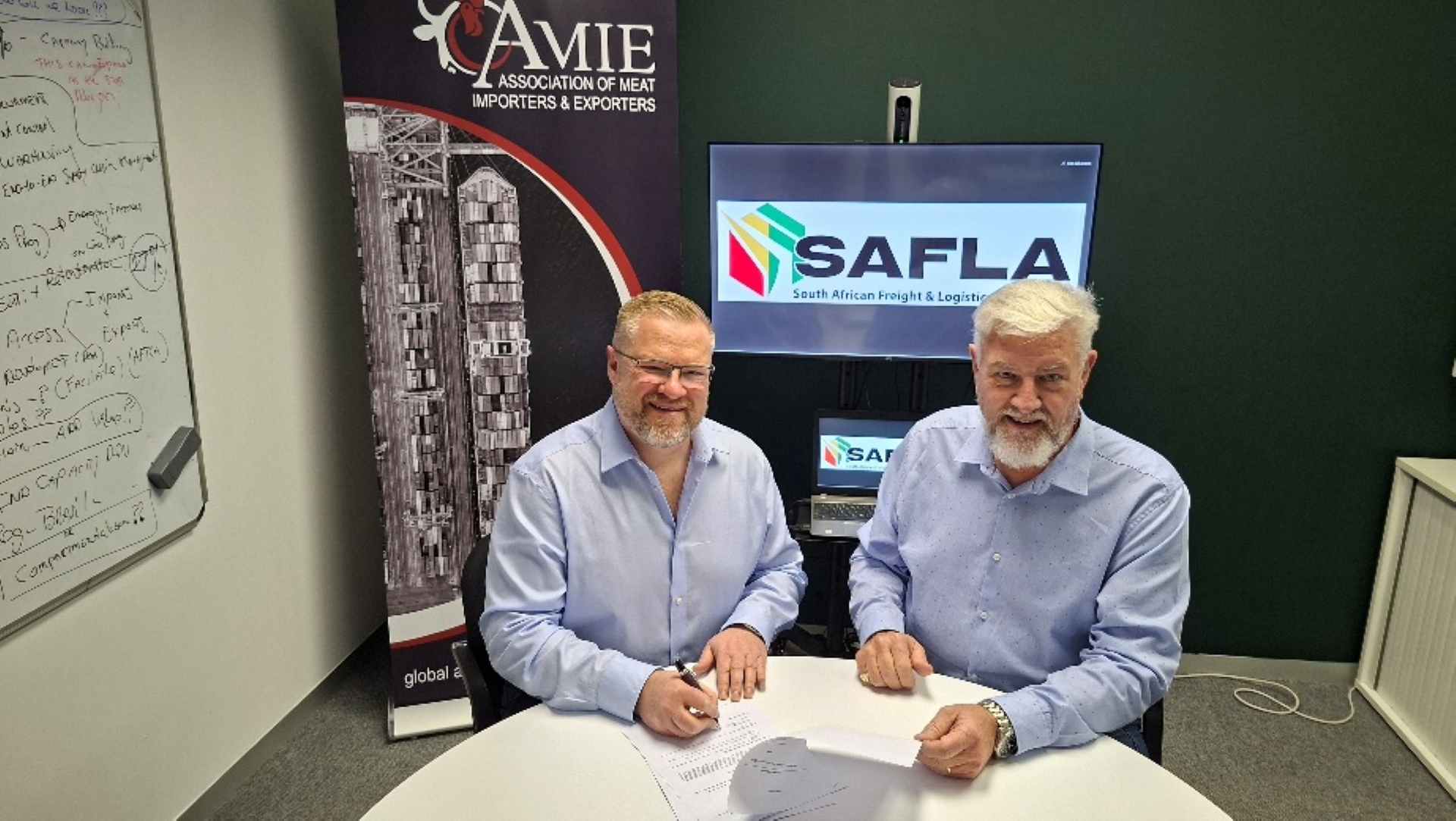
The new cooperation agreement between SAFLA and AMIE SA will target port delays, regulatory bottlenecks and supply-chain constraints affecting South Africa’s meat trade.
The South African Freight and Logistics Association (SAFLA) and the Association of Meat Importers and Exporters of South Africa (AMIE SA) have signed a Memorandum of Cooperation (MoC) aimed at addressing the logistics, port and regulatory challenges affecting the country’s meat trade.
The agreement provides a framework through which the two organizations will identify persistent constraints, share evidence and prepare practical proposals for government agencies and other stakeholders. Areas of focus will include port operations, border procedures, veterinary and sanitary requirements, market access, road and rail connections, and supply-chain resilience.
A Coordinated Industry Voice
Jonathan McDonald, Vice Chairman of SAFLA, said logistics plays a central role in food security, trade competitiveness and economic growth.
“This MoC gives SAFLA and AMIE SA a stronger platform to speak with one informed voice, engage constructively with government agencies and work with them to resolve issues that affect cargo flow, costs and reliability,” he said.
Paul Matthew, CEO of AMIE SA, said closer coordination between the public and private sectors would be necessary to convert available trade opportunities into economic growth: “We have the product, the capability and markets that are ready to buy South African meat,” Matthew said. “What is required is effective coordination: clear communication between national and provincial authorities, efficient certification and inspection processes, and a willingness to bring the private sector into the solution.”
Market Access and Veterinary Controls
The agreement comes as exporters continue to face risks associated with market-access delays, veterinary approvals and animal-health events. These challenges can affect the ability of suppliers to serve international customers consistently and may lead buyers to seek alternative sources.
The partnership will support regulatory processes that maintain food-safety and compliance standards while reducing avoidable administrative bottlenecks. It will also promote traceability, credible controls and internationally accepted approaches to regionalization.
Meat Exports Highlight Economic Potential
AMIE SA estimates that South Africa exported approximately 81,000 tons of beef, sheep and goat meat worth around R63 billion between 2025 and May 2026.
Matthew said export markets allow producers to generate value from different cuts across the carcass, improving overall carcass balance and potentially supporting a more sustainable and affordable domestic supply.
The logistics sector underpinning this trade is also significant. South Africa’s freight-forwarding market reportedly generated approximately R81 billion in revenue during 2025, while freight forwarders coordinate more than 80% of the country’s international trade.
Port and Cold-Chain Pressures Remain
Despite improvements to infrastructure and equipment at the Port of Durban, the meat industry continues to encounter pressure points involving cold-chain capacity, container handling, inspection coordination and the release of consignments.
“Through industry engagement, communication and joint advocacy, SAFLA and AMIE SA intend to help convert recurring challenges into coordinated action,” McDonald said.
The organizations believe that stronger cooperation between industry and government can improve logistics performance and support a more competitive and resilient South African meat sector.
For more insights into trade and logistics across Africa, visit our dedicated pages and follow Gulf Africa Review on LinkedIn.