

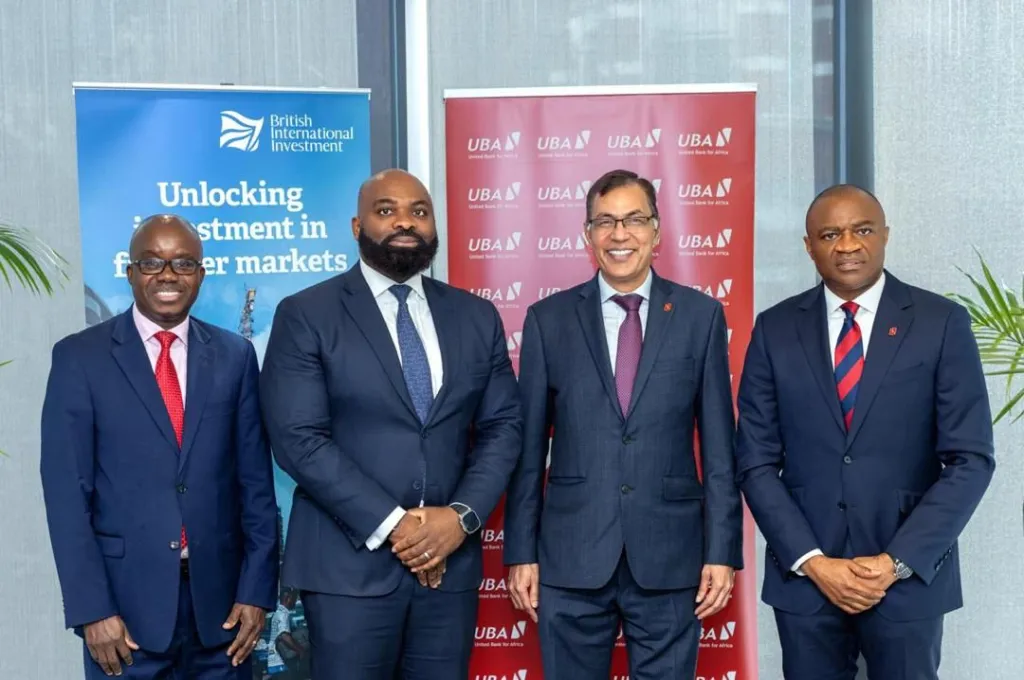
A new collaboration between UBA and BII targets $80bn financing gap holding back African trade.
United Bank for Africa (UBA), through its UK subsidiary, has signed a letter of intent with British International Investment (BII) to explore a trade finance collaboration aimed at expanding access to capital for businesses across Africa.
The proposed initiative is designed to increase the availability of trade and working capital facilities, particularly for companies operating across borders within the continent. By targeting financial instruments such as letters of credit, guarantees, and supply chain finance, the partnership seeks to address one of the most persistent structural constraints on African trade.
Access to such instruments remains limited, especially for small and medium-sized enterprises, restricting their ability to participate competitively in both regional and global markets.
Bridging an $80 Billion-Plus Gap
The collaboration is positioned against a backdrop of a significant trade finance shortfall. The African Development Bank estimates that the continent faces a gap exceeding $80 billion annually, a figure that continues to limit the scale and efficiency of intra-African trade.
This shortage is particularly acute in supply chain finance, where only a fraction of demand is currently met, leaving a substantial portion of trade activity underfunded.
By combining UBA’s pan-African banking network with BII’s development finance mandate, the two institutions aim to unlock transactions that might otherwise fall outside the appetite of traditional commercial lenders.
Leveraging Pan-African Networks
Under the proposed structure, UBA UK will utilize its position as the group’s hub for trade operations to originate and structure transactions across its network spanning 20 African countries.
BII, as the UK’s development finance institution, is expected to support higher-risk deals, enabling capital to flow into markets and sectors that are typically underserved.
Lok Mishra, Chief Executive Officer of UBA UK, said: “The signing of this letter with BII represents a landmark moment for UBA UK and for the UBA Group’s global ambitions. As the Group’s hub for Trade Operations, UBA UK is uniquely positioned to connect African businesses with the international financial system. Working alongside BII, we can extend that capability further — mobilizing capital where it matters most and helping to close the trade finance gap that holds back so much African potential.”
Supporting AfCFTA Implementation
The initiative aligns closely with the operationalization of the African Continental Free Trade Area (AfCFTA), which aims to create a single market of 1.3 billion people with a combined GDP of $3.4 trillion.
Both institutions have identified AfCFTA as a key catalyst for expanding trade finance solutions, recognising that improved access to capital is essential for translating policy frameworks into actual cross-border transactions.
Chris Chijiuitomi, Managing Director and Head of Africa at BII, said: “British International Investment is committed to catalyzing private sector growth across Africa, and trade finance is a critical enabler of that growth. We welcome the opportunity to collaborate with UBA Group, whose pan-African network and deep institutional relationships can help advance our ambition to expand access to trade and working-capital finance, particularly in frontier markets.”
From Policy to Transactions
The proposed collaboration reflects a broader shift in the intra-African trade narrative—from policy ambition to execution. While frameworks such as AfCFTA have laid the foundation for integration, the ability of businesses to access financing remains a decisive factor in determining whether trade flows can scale.
By targeting the financial infrastructure underpinning trade, UBA and BII are positioning themselves at the centre of efforts to convert continental integration into tangible economic activity.
The initiative remains subject to further assessment, due diligence, and internal approvals by both parties before any formal facility is established.
For more stories of trade from across Africa, visit our dedicated archives and follow us on LinkedIn.