

Close Menu
    What's Hot

    Morocco Becomes Africa’s Leading Industrial Economy

    May 27, 2026

    South African Poultry Industry Takes US Chicken Import Quota Fight to Court

    May 25, 2026

    Kenya, Morocco and Nigeria Lead ADAPT Digital Trade Rollout

    May 22, 2026
    Gulf Africa ReviewGulf Africa Review
    • Industry
    • Infrastructure
      1. Airport
      2. Hospitality
      3. Ports
      4. Power
      5. Rail
      6. Roads
      7. Transport
      Featured

      Osun seeks to capitalise on infrastructure momentum

      Infrastructure May 21, 2018
      Recent

      APPO & ARDA Signal New Push for Africa’s Downstream Integration

      April 15, 2026

      Africa Air Cargo Growth Driven by Perishables and Trade Shifts

      April 10, 2026

      GoSwap Secures Seed Funding to Expand EV Battery Swapping Network in Morocco

      April 3, 2026
    • Business & Trade
      1. Agri-Business
      2. Entrepreneurship
      3. FDI
      4. Legislative
      5. MEA
      6. Telecoms
      7. Properties
      Featured

      Analysts predict bullish future for Nigeria’s REITs market

      Business Business & Trade January 21, 2018
      Recent

      Oman Launches Angola Investment Bank to Deepen Africa-Middle East Trade

      April 22, 2026

      Middle East Crisis Pressures African SMEs

      April 20, 2026

      Middle East Crisis Could Cut Africa’s 2026 Growth by 0.2%

      April 17, 2026
    • Finance
      1. Banking
      2. Islamic finance
      Featured

      Littlefish Raises $9.5 Million to Expand Merchant Infrastructure for African Banks

      Business & Trade Finance Infrastructure March 25, 2026
      Recent

      Littlefish Raises $9.5 Million to Expand Merchant Infrastructure for African Banks

      March 25, 2026

      India Exim $40mn Credit Line for West African Development

      August 27, 2025

      AfDB Anchors $500M Financing for Ethiopia’s “Mega-Airport”

      August 13, 2025
    • Innovation
    Gulf Africa ReviewGulf Africa Review
    Industry

    Morocco Becomes Africa’s Leading Industrial Economy

    May 27, 20263 Mins Read
    Facebook Twitter Pinterest LinkedIn Tumblr Email
    Morocco Industry
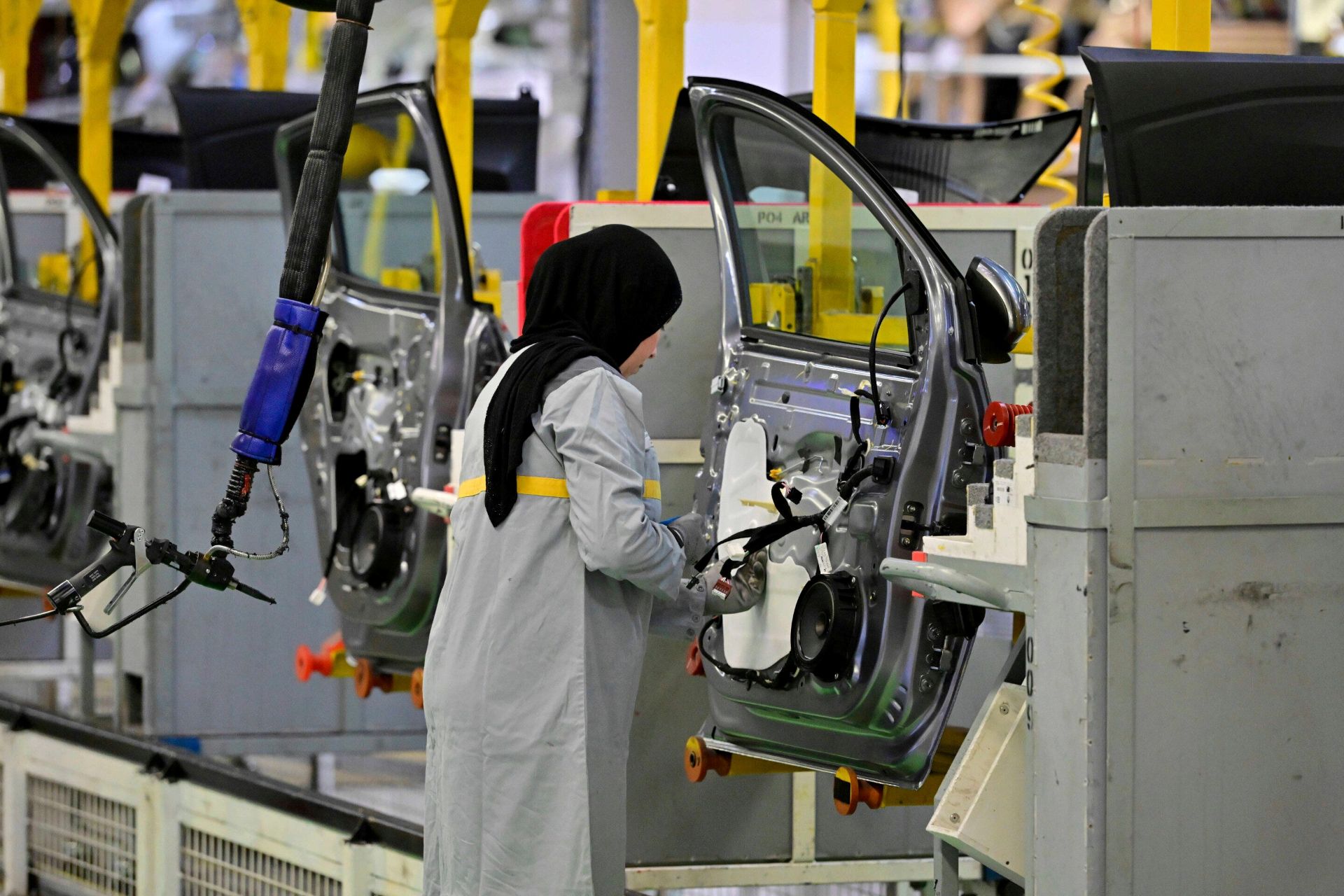
    While Morocco now leads the ranking, South Africa remains a major industrial powerhouse.
    Share
    Facebook Twitter LinkedIn Pinterest Email

    Morocco overtakes South Africa as Africa’s top industrial economy in AfDB’s 2025 index, driven by upgrading and exports.

    Morocco Takes the Lead

    Morocco has overtaken South Africa to become Africa’s leading industrial economy, according to the African Development Bank’s (AfDB) 2025 Africa Industrialization Index, released alongside the first Africa Industrial Investment Barometer during the AfDB Annual Meetings in Brazzaville.

    The Bank Group released the 2025 edition of its Africa Industrialization Index (AII) alongside the first Africa Industrial Investment Barometer (AfIIB), produced by WITBA Invest SA in partnership with Trendeo. Together, the reports provide a detailed assessment of Africa’s industrial landscape, highlighting which countries are advancing fastest, where industrial investment is concentrated, and how much value creation is retained within the continent.

    The AII can be read here and the AfIIB, here.

    The ranking is based on an assessment of industrial development across 54 African countries between 2010 and 2024. Morocco’s rise was attributed to sustained industrial upgrading, export diversification and strong industrial policy.

    The Africa Industrial Investment Barometer

    The AfIIB evaluates African industrialization through three measures: industrial diversification, investment attractiveness, and productive anchoring, an indicator of how strongly investment is rooted within local economies. North Africa ranked highest across all three categories, attracting 56 percent of cumulative industrial investment on the continent between 2020 and 2025, led by Morocco and Egypt.

    “The continent’s real deficit is no longer the absence of industrial strategies. What is still lacking is execution discipline, continuity in public policy, and systemic coherence between financing, energy, infrastructure, human capital, governance, and industrial vision,” said Dr Harouna Kaboré, President of WITBA Invest.

    “African industrialization can no longer remain a statement of intent or a theoretical projection. It must become a measurable, managed, and strategically driven dynamic,” he added.

    South Africa Remains Significant

    While Morocco now leads the ranking, South Africa remains a major industrial powerhouse. However, the reports indicate that its competitiveness has declined steadily.

    North Africa and Southern Africa continue to dominate industrial output and export sophistication, while East, West and Central Africa continue to lag in industrial development and regional production linkages.

    Investment Shifts Toward North Africa

    North Africa leads across diversification, attractiveness and productive anchoring, drawing 56% of cumulative continental industrial investment between 2020 and 2025, with Morocco and Egypt topping the list.

    The broader picture remains mixed. Africa accounts for less than 2% of global manufacturing output and 1.4% of global manufactured exports, while manufacturing value-added per capita has fallen below 2014 levels.

    Continental Progress, Structural Gaps and Next Steps

    Despite those challenges, 41 of the 54 countries assessed improved their industrialization scores, while overall continental performance rose by 6%.

    However, intra-African trade remains low at 14.4% of total trade, reflecting fragmented industrial ecosystems and weak regional production linkages.

    AfDB’s Director for Industrial and Trade Development, Ousmane Fall, said the report served as both a diagnosis and roadmap, “It shows that 41 of our 54 countries are now moving in the right direction, but it also reminds us that industrialization at scale demands resilient infrastructure, value addition close to source, and finance mobilized on African terms. That is precisely what the Four Cardinal Points are designed to deliver.”

    The report also calls for stronger regional integration anchored on the African Continental Free Trade Area, supported by reliable energy, industrial infrastructure, technical skills and harmonized standards.

    For more information on African industrial development, visit our dedicated archives and follow us on LinkedIn.

    AfDB Africa Industrial Investment Barometer Africa Industrialization Index industrial economy morocco
    Share. Facebook Twitter Pinterest LinkedIn Tumblr Telegram Email
    Previous ArticleSouth African Poultry Industry Takes US Chicken Import Quota Fight to Court

    Related Posts

    Trade

    Kenya, Morocco and Nigeria Lead ADAPT Digital Trade Rollout

    May 22, 2026
    Energy Industry Trade

    South Africa Joins Afreximbank, Unlocks US$8 Billion for Trade, Energy & Industry

    February 9, 2026
    Industry Trade

    Morocco and Senegal to Deepen Industry and Trade Cooperation

    January 28, 2026
    Add A Comment
    Leave A Reply Cancel Reply

    LATEST STORIES

    Morocco Becomes Africa’s Leading Industrial Economy

    May 27, 2026

    South African Poultry Industry Takes US Chicken Import Quota Fight to Court

    May 25, 2026

    Kenya, Morocco and Nigeria Lead ADAPT Digital Trade Rollout

    May 22, 2026

    Oman Launches Angola Investment Bank to Deepen Africa-Middle East Trade

    April 22, 2026

    Middle East Crisis Pressures African SMEs

    April 20, 2026
    • Business
      • Agri-Business
      • Entrepreneurship
      • FDI
      • Legislative
      • MEA
      • Properties
      • Telecoms
    • Infrastructure
      • Airport
      • Hospitality
      • Ports
      • Power
      • Rail
      • Roads
      • Transport
    • Finance
      • Banking
      • Islamic finance
    • Commodities
      • Agri commodities
      • Metals & minerals
      • Precious metals
    • Culture & Society
      • Education
      • Energy
    GAR logo
    © GulfAfricaReview.com 2014-2022, All Rights Reserved.

    Gulf Africa Review is a trade news and future networking platform for businesses leaders and trade organisations, established to first inform and secondly assist in facilitating the ongoing business and trade relations between the Gulf Cooperation Council countries and Sub-Saharan Africa. We aim to provide an apolitical voice for this channel of economic activity in a way that benefits both geographies by improving the availability of information about market events, developments and opportunities, while publicising the successes achieved by this ever-broadening regional relationship.

      Subscribe to our newsletter

      Type above and press Enter to search. Press Esc to cancel.