

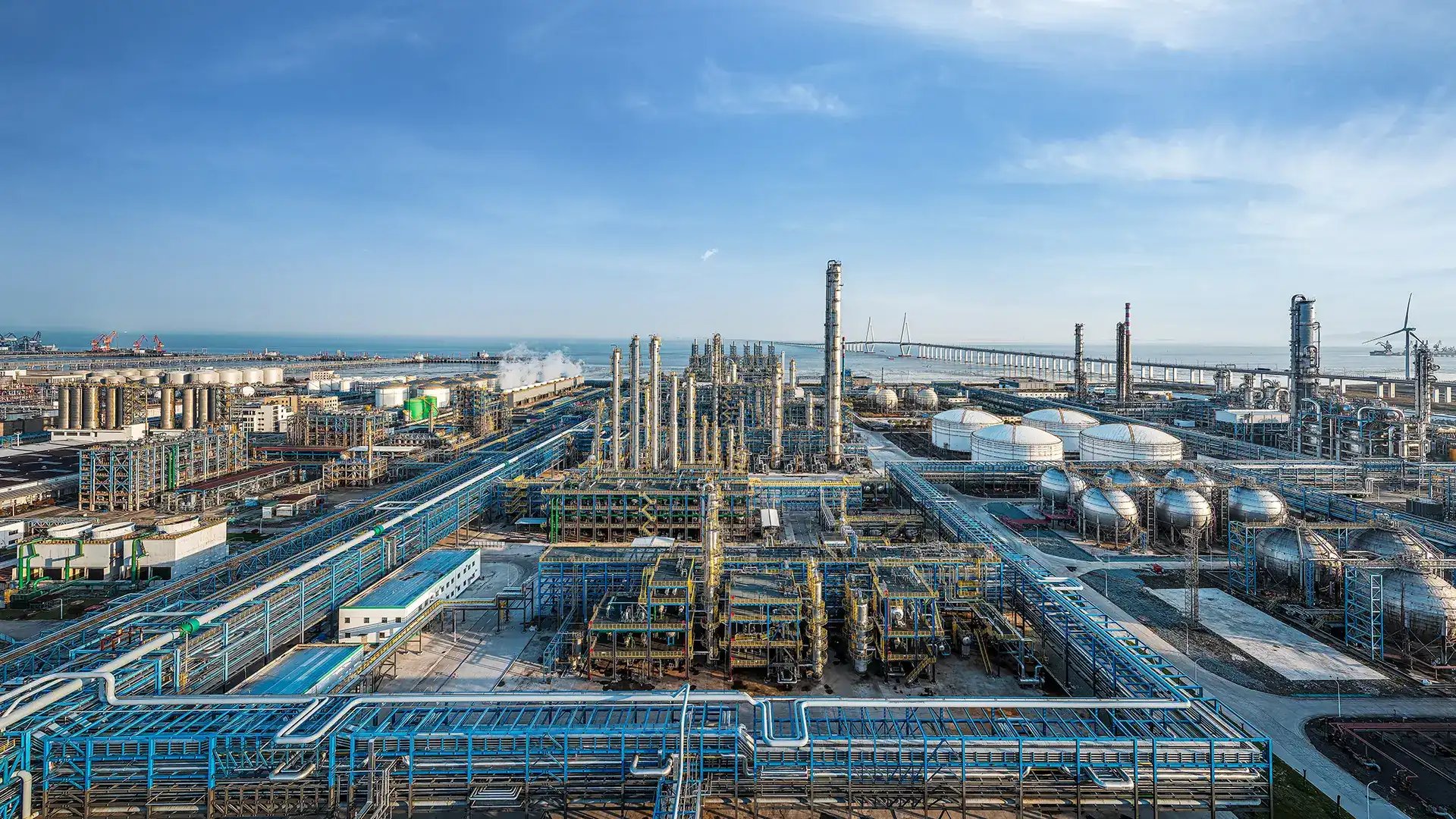
Lagos’ Dangote Refinery is transforming Nigeria from a major fuel importer into a growing regional supplier, with exports to Africa and Europe rising sharply.
Nigeria’s seaborne petroleum product exports have increased seven-fold since 2023, driven largely by rising output from the Dangote Petroleum Refinery and a growing shift towards regional fuel supply.
According to the US Energy Information Administration, Nigerian seaborne petroleum product shipments averaged 561,000 barrels per day in the second quarter of 2026, up from an annual average of 79,000 barrels per day in 2023.
Of that total, around 350,000 barrels per day were exported, compared with just 46,000 barrels per day three years earlier.
African Fuel Flows Shift
The EIA said the increase has been underpinned by the opening of the Dangote refinery in 2024 and subsequent increases in capacity.
Exports to other African countries reached nearly 120,000 barrels per day in the second quarter, up from 89,000 barrels per day a year earlier, while shipments to Europe climbed to 130,000 barrels per day from just 15,000 barrels per day in 2023.
The increased supply has helped reshape fuel trade flows across Africa and beyond. “We’re seeing a clear shift toward regional barrels, with Dangote steadily increasing its share of Africa’s seaborne fuel imports,” said Vortexa analyst Mick Strautmann.
Nigeria Cuts Reliance on Imports
The trade shift is equally significant domestically.
Nigeria imported almost 400,000 barrels per day of petroleum products in 2023. By the second quarter of 2026, seaborne imports had fallen to below 130,000 barrels per day, while intra-Nigerian product shipments increased to 211,000 barrels per day.
Recent sales data show Dangote’s regional reach expanding quickly. In March 2026, the refinery sold 12 gasoline cargoes totaling 456,000 tons to Ivory Coast, Cameroon, Tanzania, Ghana and Togo.
Dangote are planning further expansions, according to CEO David Bird, “Probably the most developed is our Southwestern opportunity from the Namibia tank farm and then a pipeline through Botswana into Zimbabwe into Zambia—potentially down into South Africa and maybe as far up as into DRC.” Bird also mentioned the company’s plans to build a second refinery in East Africa.
Regional Market Integration
Nigeria’s downstream regulator is now arguing that the expansion of domestic refining should be accompanied by greater integration of West Africa’s petroleum market.
Rabiu Umar, Chief Executive of the Nigerian Midstream and Downstream Petroleum Regulatory Authority, said the region’s refining landscape is “profoundly changing” as facilities including Dangote reshape regional supply chains.
“In the years ahead, our measure of success must be a West African market in which products move more efficiently, supply is more secure, investors have greater confidence, regional trade expands, and prices increasingly reflect the fundamentals of our own market,” Umar said.
Expansion Could Deepen the Shift
The refinery has already tested output of 700,000 barrels per day, above its original 650,000-barrel-per-day nameplate capacity, and Dangote plans to increase capacity to 1.4 million barrels per day within three years. Around half of April’s export volumes went to other African countries.
If that expansion is delivered, the refinery could strengthen Nigeria’s position not simply as an oil producer, but as a major exporter of higher-value refined products.
For more African energy news, visit Gulf Africa Review and follow GAR on LinkedIn.
1 Comment
[834642]supplies professional anti-violence equipments and solutions for the whole world with strong and perfect production capacity. anti-violence.org